Why Role Play Toys Are Important for Child Development
In a world buzzing with technology, the timeless appeal of role play toys continues to shine brightly, playing a pivotal role in child development. These imaginative tools do more than spark creativity; they lay the foundation for essential life skills that children will carry into adulthood. Through the art of pretend play, children explore social scenarios, build emotional intelligence, and develop problem-solving abilities—all while having fun. Whether it's a doctor’s kit, a kitchen set, or a dress-up box, each toy invites young minds to step into diverse roles, fostering empathy and cooperation. As children act out experiences, they not only entertain themselves but also engage in critical cognitive development. With convenient options like a toy delivery service in Qatar, it has never been easier for parents to provide their children with valuable role play tools. So, let’s delve into the enchanting world of role play toys and discover why they're indispensable for nurturing well-rounded, confident individuals ready to embrace the wonders of life.
Understanding Role Play Toys
Role play toys are more than just playthings; they are essential tools that encourage children to use their imagination and step into various roles, mimicking the real world around them. These toys can range from miniature kitchens and doctor kits to costumes and puppets, each designed to help children explore different scenarios and professions. By engaging in pretend play, children can experiment with various social roles, gain a better understanding of their environment, and develop critical thinking skills.
In the realm of child development, the concept of role play is deeply rooted in the theory of learning through imitation. Children observe the adults and peers around them and replicate what they see in their play. This process of imitation enables them to understand complex social interactions and behaviors. Role play toys provide the perfect medium for this kind of experiential learning, allowing children to explore and internalize the world around them in a safe and controlled environment.
Furthermore, role play toys are designed to be open-ended, meaning there is no right or wrong way to use them. This flexibility encourages children to be creative and to think outside the box. Whether they are pretending to be a chef in a play kitchen or a doctor treating a patient, they are free to make their own rules and scenarios. This autonomy in play is crucial for developing a sense of independence and self-confidence, as children learn to trust their instincts and make decisions on their own.
The Benefits of Role Play in Child Development
The benefits of role play in child development are vast and multifaceted, touching on nearly every aspect of a child's growth. One of the most significant advantages is the development of social skills. When children engage in role play, they often do so with others, whether it's siblings, friends, or caregivers. This interaction requires them to communicate, negotiate, and collaborate, all of which are essential skills for successful socialization.
In addition to social skills, role play also enhances cognitive development. When children immerse themselves in imaginative scenarios, they engage in problem-solving and critical thinking. For example, a child playing with a grocery store set might have to figure out how to sort items, handle pretend money, and serve customers. These activities require them to use logic and reasoning, which are key components of cognitive development.
Role play also has a profound impact on emotional development. By stepping into different roles, children can explore a range of emotions and understand how to express and manage them. For instance, playing the role of a doctor can help a child understand empathy and compassion, while playing a superhero can boost their confidence and sense of bravery. This emotional exploration is crucial for developing emotional intelligence, which is the ability to recognize, understand, and manage one's own emotions and the emotions of others.
How Role Play Toys Enhance Social Skills
Role play toys are instrumental in enhancing social skills, as they require children to interact with others and navigate various social situations. When children play together, they must communicate effectively to ensure that their play scenarios run smoothly. This communication often involves taking turns, sharing ideas, and resolving conflicts, all of which are fundamental social skills.
Moreover, role play toys often involve scenarios that mimic real-life social interactions, such as playing house, running a store, or taking care of a pet. Through these scenarios, children learn about social norms and expectations. They practice polite behavior, such as saying "please" and "thank you," and learn how to cooperate with others to achieve a common goal. These experiences are invaluable for helping children understand and navigate the complexities of social interactions.
Another way that role play toys enhance social skills is by encouraging children to adopt different perspectives. When a child pretends to be a teacher, a parent, or a firefighter, they must think about what that role entails and how it feels to be in that position. This perspective-taking is a crucial component of empathy, which is the ability to understand and share the feelings of others. By practicing empathy through role play, children become more considerate and compassionate individuals.
The Impact of Imaginative Play on Cognitive Development
Imaginative play, facilitated by role play toys, has a significant impact on cognitive development. When children engage in pretend play, they use their imagination to create scenarios and solve problems, which stimulates their cognitive abilities. For example, a child playing with a construction set might have to figure out how to build a stable structure or how to use different tools effectively. These problem-solving activities require the use of critical thinking and reasoning skills.
Furthermore, imaginative play promotes language development, as children often use complex vocabulary and sentence structures during their play. For instance, a child pretending to be a chef might use words like "ingredients," "recipe," and "oven," which they might not use in everyday conversation. This exposure to new vocabulary helps to expand their language skills and enhances their ability to communicate effectively.
Additionally, imaginative play fosters creativity, which is a key component of cognitive development. When children create their own play scenarios, they use their imagination to come up with new ideas and solutions. This creative thinking is essential for cognitive flexibility, which is the ability to think about different concepts and perspectives simultaneously. Cognitive flexibility is crucial for problem-solving and intellectual growth, as it allows children to adapt to new situations and think outside the box.
Role Play Toys and Emotional Intelligence
Role play toys play a crucial role in the development of emotional intelligence, which is the ability to recognize, understand, and manage one's own emotions and the emotions of others. By engaging in pretend play, children can explore a range of emotions in a safe and controlled environment. For example, a child pretending to be a doctor might learn about empathy and compassion by taking care of a sick patient, while a child pretending to be a superhero might learn about bravery and confidence.
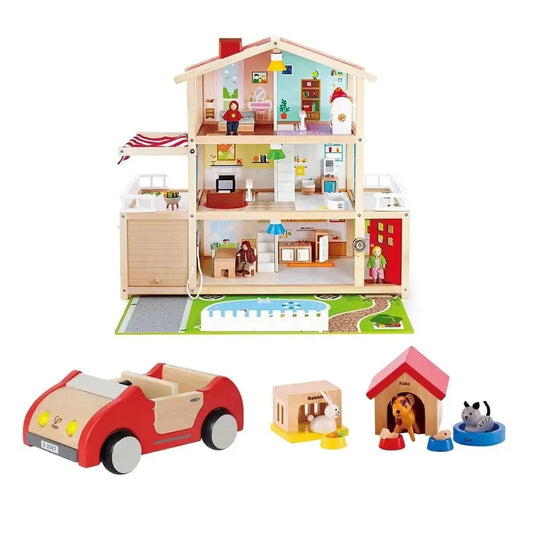
Through role play, children also learn how to express and regulate their emotions. For instance, a child playing with a dollhouse might act out scenarios involving family members, such as a disagreement or a celebration. These scenarios provide opportunities for children to practice expressing their emotions and finding appropriate ways to manage them. This emotional exploration is crucial for developing emotional intelligence, as it helps children understand how to handle their own emotions and respond to the emotions of others.
Furthermore, role play toys encourage children to adopt different perspectives, which is a key component of empathy. When children pretend to be someone else, they must think about what that person might be feeling and how they might respond to different situations. This perspective-taking helps children develop empathy and become more considerate and compassionate individuals. By practicing empathy through role play, children learn to understand and respect the feelings of others, which is essential for building positive relationships and social connections.
Encouraging Creativity through Role Play
Role play toys are a powerful tool for encouraging creativity in children. By providing open-ended play opportunities, these toys allow children to use their imagination and come up with their own play scenarios. For example, a child playing with a pirate ship might invent a story about a treasure hunt, complete with characters, challenges, and adventures. This creative storytelling helps to stimulate their imagination and encourages them to think outside the box.
In addition to fostering imagination, role play toys also promote creative problem-solving. When children engage in pretend play, they often encounter challenges that require them to come up with innovative solutions. For instance, a child playing with a construction set might need to figure out how to build a bridge or a tower. This problem-solving process encourages them to think creatively and come up with new ideas and approaches.
Furthermore, role play toys provide opportunities for children to express themselves creatively. For instance, a dress-up box allows children to create their own costumes and characters, while a play kitchen lets them invent their own recipes and dishes. This creative expression is crucial for developing a sense of individuality and self-confidence. By exploring different roles and scenarios, children learn to trust their instincts and embrace their unique ideas and perspectives.
Types of Role Play Toys and Their Uses
There are many different types of role play toys, each designed to help children explore different scenarios and develop various skills. Some of the most popular role play toys include kitchen sets, doctor kits, costumes, and puppets. Each type of toy offers unique opportunities for imaginative play and learning.
Kitchen sets are a favorite among young children, as they allow them to mimic the cooking and meal preparation activities they see in their daily lives. By playing with a kitchen set, children can learn about different foods, utensils, and cooking techniques. They can also practice fine motor skills by chopping, stirring, and serving food. Additionally, kitchen sets provide opportunities for social play, as children can take on different roles, such as chef, waiter, or customer, and interact with others in a restaurant or home setting.
Doctor kits are another popular type of role play toy, allowing children to explore the world of healthcare and medicine. By pretending to be a doctor, nurse, or patient, children can learn about the human body, medical instruments, and common health issues. This type of play also promotes empathy and compassion, as children learn to care for others and understand the importance of health and well-being. Doctor kits can also help to alleviate fears about medical visits, as children become more familiar with the tools and procedures they might encounter.
Costumes and dress-up clothes are essential for imaginative play, as they allow children to transform into different characters and explore various roles. Whether it's a superhero costume, a princess dress, or a firefighter uniform, dress-up clothes provide endless opportunities for creative storytelling and role-playing. This type of play encourages children to use their imagination and come up with their own scenarios and adventures. It also helps to build confidence, as children embrace different identities and express themselves in new and exciting ways.
Puppets are another versatile role play toy that can be used to create stories and act out different scenarios. By manipulating puppets, children can develop fine motor skills and hand-eye coordination. They can also practice language skills by creating dialogues and narrating stories. Puppets provide a unique opportunity for children to explore different characters and emotions, as they can take on the roles of both the puppeteer and the audience. This type of play encourages creativity, empathy, and communication skills.
Choosing the Right Role Play Toys for Different Ages
When choosing role play toys for children, it's important to consider their age and developmental stage. Different toys are suitable for different age groups, and selecting the right toys can help to ensure that children get the most out of their playtime.
For infants and toddlers, simple role play toys that encourage exploration and sensory play are ideal. Soft dolls, plush animals, and basic kitchen sets can help young children develop fine motor skills and hand-eye coordination. These toys also provide opportunities for social interaction, as children can play alongside caregivers and peers.
Preschoolers are ready for more complex role play toys that encourage imaginative play and problem-solving. Doctor kits, dress-up clothes, and playsets with multiple components are great choices for this age group. These toys help to develop cognitive and social skills, as children engage in more elaborate play scenarios and interact with others.
School-aged children can benefit from role play toys that challenge their creativity and critical thinking skills. Construction sets, science kits, and advanced playsets, such as dollhouses or pirate ships, are suitable for this age group. These toys encourage children to use their imagination and come up with their own play scenarios. They also promote cognitive development, as children engage in problem-solving and critical thinking.
For older children and preteens, role play toys that promote creativity and self-expression are ideal. Art sets, theater kits, and advanced building sets can help to develop creative thinking and fine motor skills. These toys also provide opportunities for social interaction, as children can collaborate with peers and family members on creative projects and play scenarios.
Role Play Toys in Educational Settings
Role play toys are not only valuable for home play but also have significant benefits in educational settings. Many schools and childcare centers incorporate role play toys into their curriculum to support learning and development. By providing opportunities for imaginative play, educators can create engaging and interactive learning experiences for children.
In early childhood education, role play toys are often used to teach social skills and promote emotional development. For example, a classroom might have a play kitchen, a doctor's office, or a grocery store, where children can practice social interactions and explore different roles. These play areas provide opportunities for children to communicate, collaborate, and develop empathy, all of which are essential for social and emotional growth.
Role play toys can also be used to teach academic concepts in a fun and engaging way. For instance, a play grocery store can be used to teach math skills, such as counting, sorting, and handling money. A play doctor's office can be used to teach science concepts, such as the human body and health. By incorporating role play into the curriculum, educators can create hands-on learning experiences that make academic concepts more relatable and enjoyable for children.
Furthermore, role play toys can be used to support language development in educational settings. For example, a puppet theater can be used to encourage storytelling and vocabulary building. Children can create their own stories and dialogues, which helps to develop their language skills and creativity. Educators can also use role play toys to introduce new vocabulary and concepts, making learning more interactive and engaging.
Conclusion: Fostering Development through Play
In conclusion, role play toys are an indispensable part of child development, offering a wealth of benefits that extend far beyond mere entertainment. By engaging in imaginative play, children can develop essential social, cognitive, and emotional skills that will serve them well throughout their lives. Role play toys provide a safe and controlled environment for children to explore different roles, express their creativity, and practice problem-solving.
As parents, caregivers, and educators, it is important to recognize the value of role play toys and to provide children with opportunities for imaginative play. Whether it's a simple kitchen set, a doctor kit, or a dress-up box, these toys can have a profound impact on a child's growth and development. With access to a reliable toy delivery service in Qatar, it's easier than ever to support children's learning and creativity. Parents looking to buy kids toys online in Qatar can find a wide variety of quality, imagination-fueling options that make playtime both educational and fun.
In a world that is increasingly dominated by technology, it is essential to preserve the timeless appeal of role play toys and to recognize their importance in nurturing the next generation. By fostering development through play, we can ensure that children have the tools they need to thrive and succeed in an ever-changing world. So, let's celebrate the magic of role play toys and the endless possibilities they offer for learning, growth, and discovery.
Tags:
Previous
Perfecting Playtime: How to Buy the Best Kids’ Toys Online in Qatar
Next
STEM Starts Young: How Early Coding Play Builds Future Innovators